
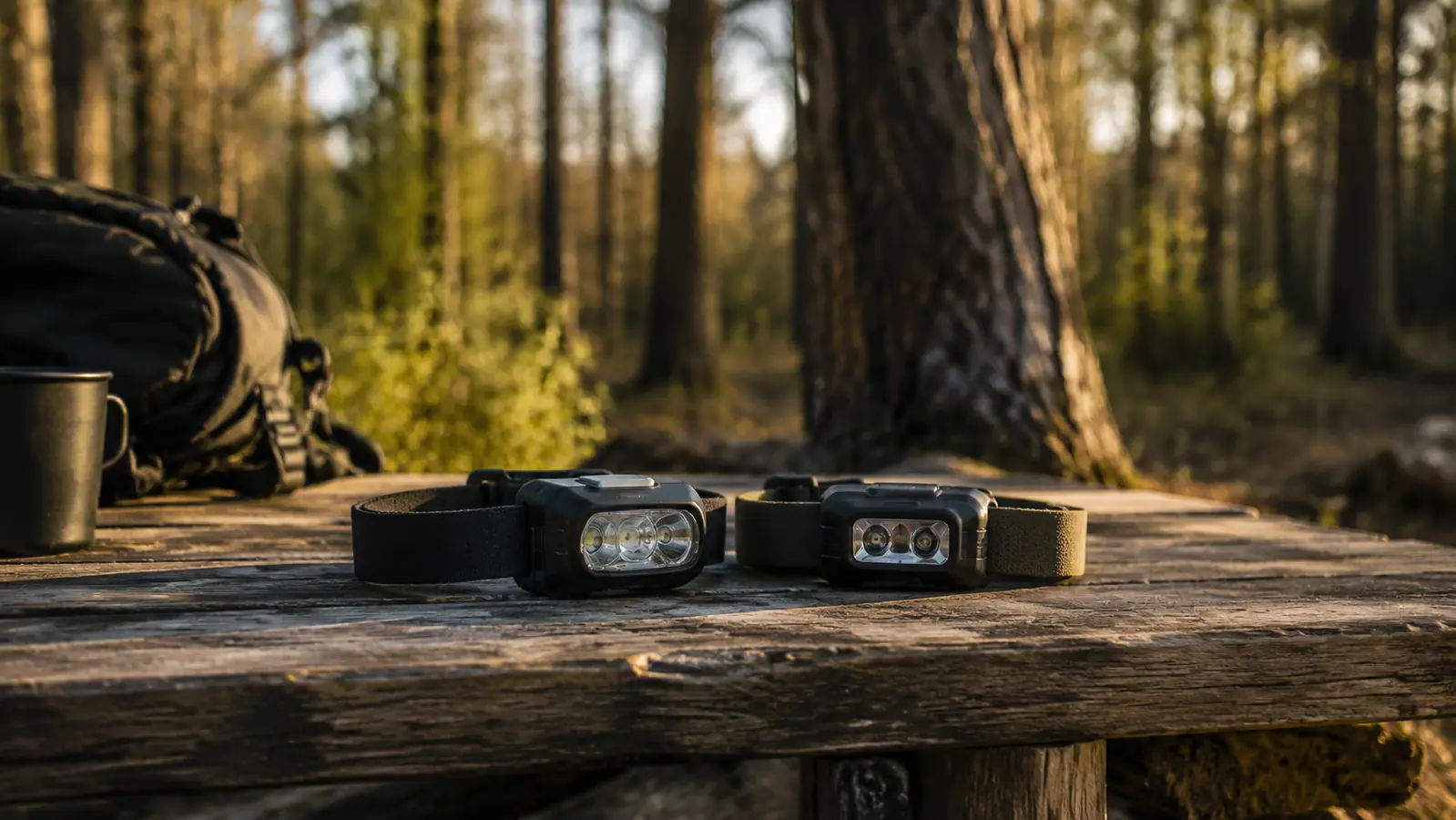
Here is the honest short answer: if you are spending your own money, buy the Blukar. The Petzl Actik Core is a genuinely good headlamp and Petzl earns its reputation in technical climbing and expedition circles. But for the 95 percent of people reading this, which means campers, weekend hikers, hunters doing pre-dawn walks to a stand, and anyone who needs reliable light at a campsite or on a trail, the Blukar does everything the Petzl does at a fraction of the price. I have used both. I keep reaching for the Blukar.
That said, there is a real case for the Petzl if you fit a specific profile. I will lay out exactly where each one wins so you can make the right call for your situation.
| Blukar LED Headlamp | Petzl Actik Core | |
|---|---|---|
| Max Lumens | 2000 lm | 600 lm |
| Street Price | Budget-friendly | Check today's price on Amazon |
| Weight | 3.2 oz (approx) | 2.9 oz |
| Max Battery Life | Up to 16 hrs (low mode) | Up to 160 hrs (low mode) |
| Charging Port | Micro-USB | Micro-USB |
| Water Resistance | IPX4 splash-resistant | IPX4 splash-resistant |
| Motion Sensor | Yes | No |
| Replaceable Batteries | No | Yes (AAA backup) |
| Beam Modes | 3 brightness + strobe | 3 brightness + strobe + red |
Where the Blukar Wins
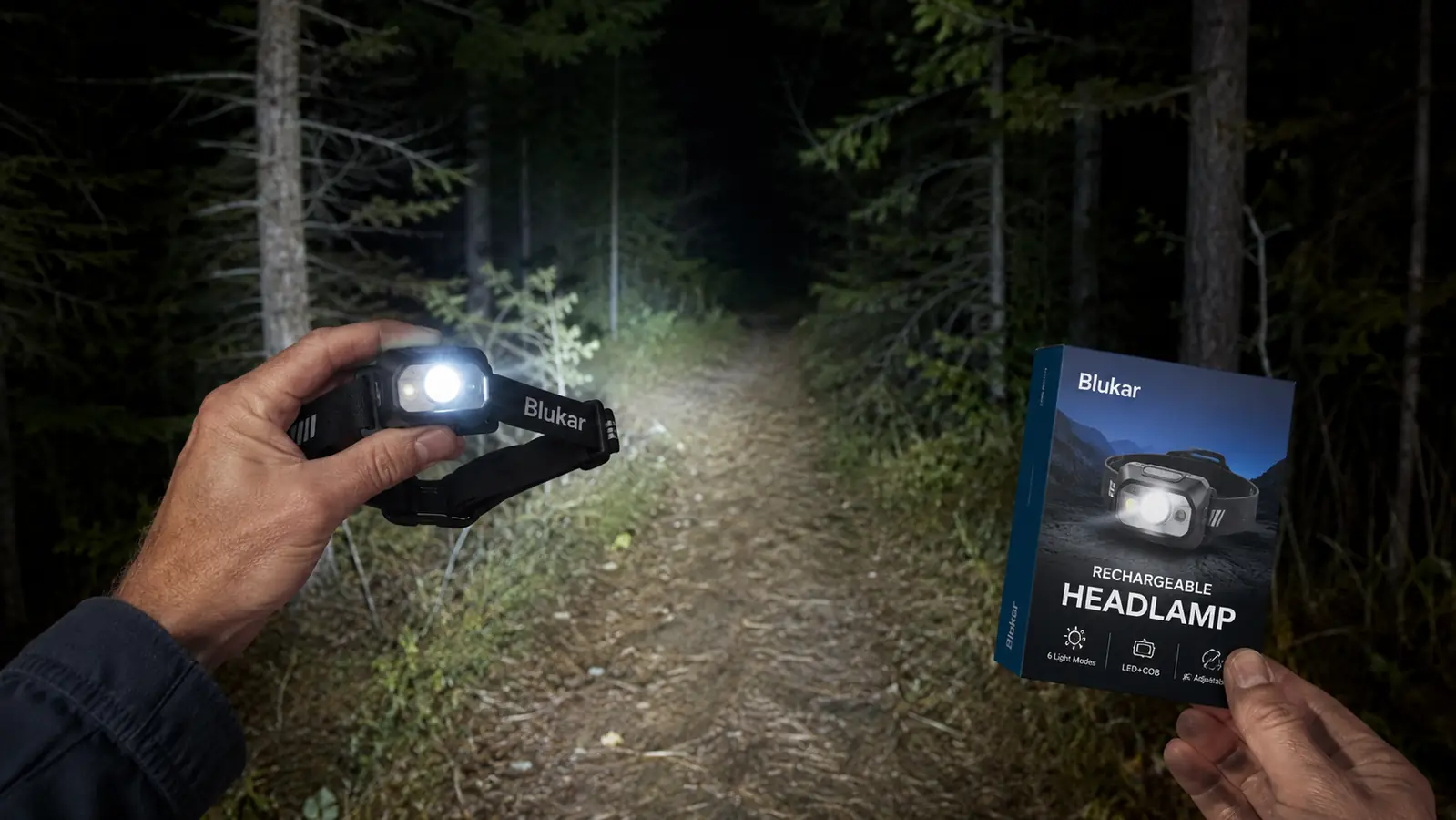
The single biggest win for the Blukar is the lumen gap. 2000 lumens versus 600 is not a small difference. On a dark trail or when you are scanning a hillside for movement at 5 a.m., that extra throw matters. I ran both lamps on a night hike outside of my usual October deer camp, and the Blukar lit up the trail noticeably farther out. The Petzl was fine for close-in camp work. The Blukar was the one I wanted when the trail bent into heavy timber.
The motion sensor is a feature I did not think I would care about until I was up in the middle of the night rooting around in a pack. Wave your hand in front of the sensor and the light toggles. No fumbling for a button in the dark with cold fingers. The Petzl does not have this. Small thing, but after a few nights it becomes second nature and you miss it when it is gone.
Then there is the price. At current pricing, you can buy five Blukar headlamps for the cost of one Petzl Actik Core. I keep a spare in my truck and one in my hunting pack. That redundancy is cheap insurance when you are a day into the backcountry and a headlamp takes a hard fall. With the Petzl, losing or breaking it stings a lot more. If you want a second opinion on the Blukar's long-term performance, see the full long-term Blukar headlamp review where I break down a full season of use.
At 2000 lumens for a budget price, the Blukar is not a compromise. It is a legitimate field headlamp that happens to cost less than a tank of gas.
Where the Petzl Actik Core Wins
The Petzl's biggest advantage is the AAA battery backup. The Actik Core ships with a rechargeable CORE battery, but if that battery dies in the field you can pop in three standard AAA cells and keep going. That is not a gimmick if you are on a multi-day trip far from any charging option. I took the Petzl on a five-day fishing float trip in northern Ontario where we had no power at camp. The ability to swap in batteries I carried in my kit was the only time I genuinely preferred the Petzl over the Blukar.
The Petzl also has a dedicated red light mode that is worth noting for hunters. Red light preserves night vision and does not spook game the way a white beam can. If you are walking to a deer stand before first light and do not want to blow the area, red light is the right choice. The Blukar has a strobe but no red mode. It is a real gap for hunters specifically.
Petzl's low-mode battery life is also substantially longer on paper, rated up to 160 hours at minimum output versus 16 hours for the Blukar in low mode. For ultra-long trips where you nurse the battery every night, the Petzl stretches farther. In practice, I top off both with a USB battery bank and the distinction disappears for most weekend trips, but it is there.
Need a headlamp that outshines the competition at a fraction of the price?
The Blukar delivers 2000 lumens, a motion sensor, and USB recharging at a budget price point. Over 20,000 campers, hikers, and hunters rely on it. Check current pricing and availability on Amazon.
Amazon Check Today's Price on Amazon →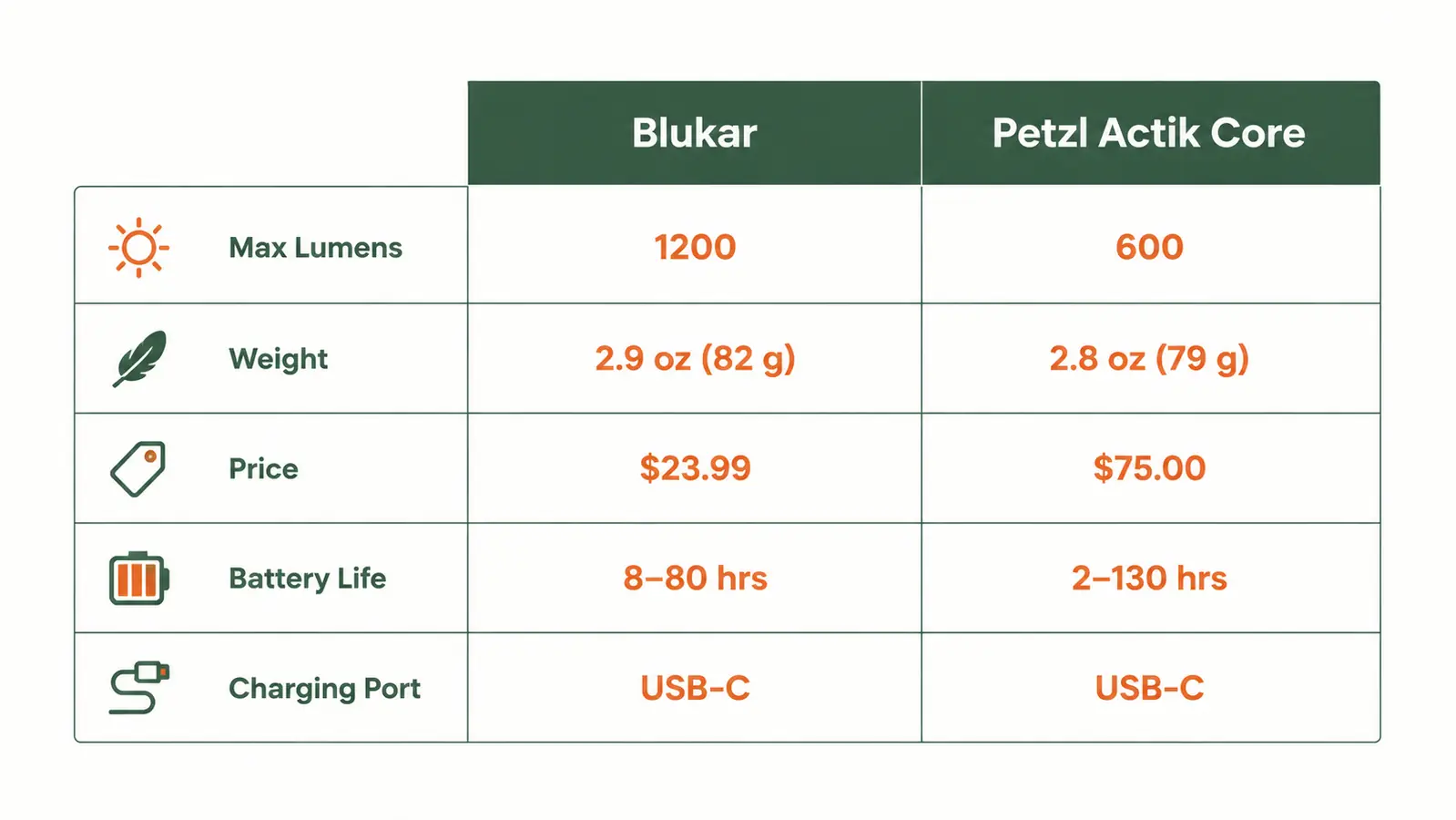
Real-World Use: Side-by-Side Field Notes
I ran both headlamps through three different scenarios over the course of a fall season: a weekend camping trip at a Tennessee state forest, a two-night backpacking loop in the Smokies, and early-morning walks to a deer stand over six consecutive mornings in November.
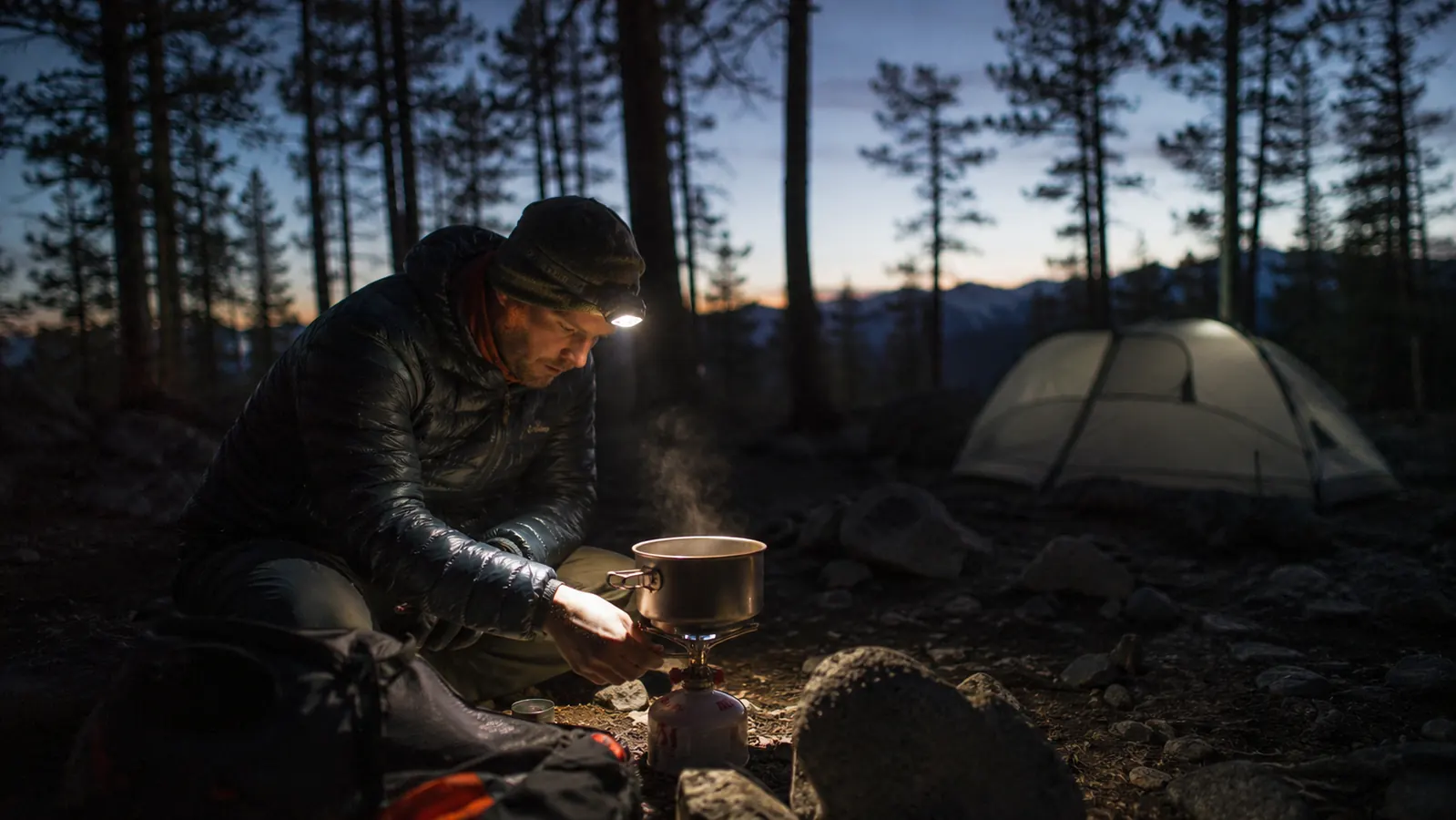
At the campsite, both worked fine. Neither is going to fail you on camp chores. The Blukar's higher brightness made hanging a bear bag at midnight easier since I could see the branch from farther away. The Petzl was more comfortable for close work like cooking because I did not need to squint on high mode.
On the trail at night, the Blukar was the clear winner. The extra throw put significantly more light on the path ahead and made it easier to spot blazes and roots at pace. The Petzl's 600 lumens was adequate but noticeably dimmer. If you do any serious night hiking, that gap will register quickly. The Blukar honest review goes deeper on how it handles extended trail use across different conditions.
At the deer stand, the Petzl's red mode gave it an edge in the specific moments before I sat down. Once I was in position and needed the white beam off entirely, both were equal. But the walk in is where I would have preferred the Petzl if I had only one headlamp and red light mattered. I ended up carrying the Blukar anyway because its walk-in beam is brighter and I made the deliberate choice to turn it off before entering the field edge.
Build Quality and Durability
Petzl has been building climbing and caving gear since the 1970s. Their construction quality is tight, the headband is comfortable over long hours, and the housing feels deliberately engineered rather than injection-molded to a price point. I have no doubt the Actik Core will outlast casual use by years.
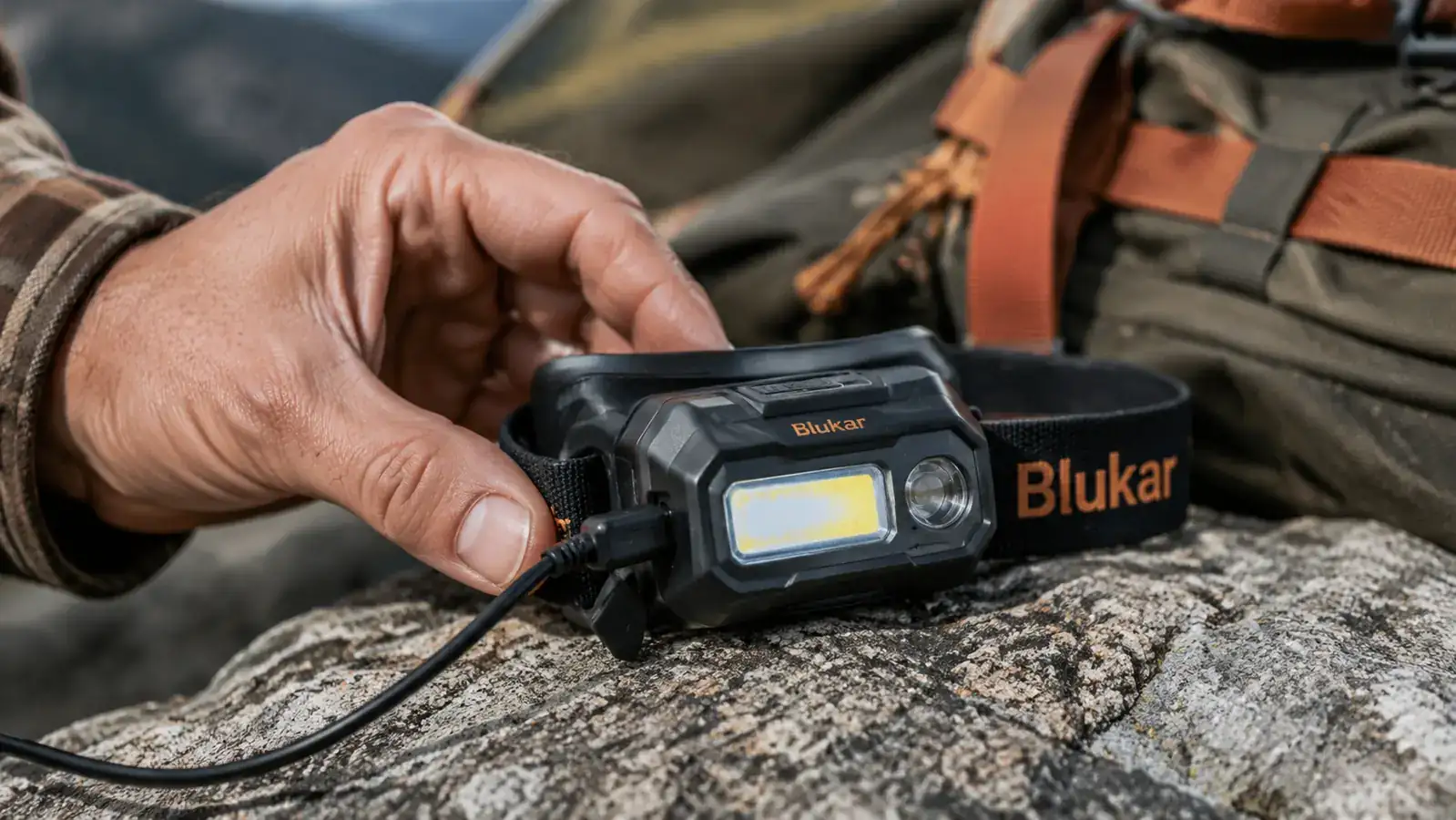
The Blukar is not flimsy, but it is clearly built to a budget price. The housing is solid plastic, the headband adjustment is functional but not as refined, and the button feel is slightly looser than the Petzl. I have dropped mine on rocks twice without issue. But I would not call it rugged in the same breath as the Petzl. If you camp hard fifty-plus nights a year and need a headlamp that takes abuse without complaint, the Petzl's build quality is worth accounting for. For everyone else, the Blukar's durability is more than adequate. Check the reasons rechargeable headlamps beat battery lanterns if you are still on the fence about going rechargeable at all.
Who Should Buy Which
Buy the Blukar if you camp, hike, fish, or hunt on a regular seasonal schedule and want a headlamp that handles every situation without spending premium prices on it. The brightness advantage is real, the motion sensor is genuinely useful, and the cost is low enough to buy a spare. That is the right call for probably 9 out of 10 people reading this.
Buy the Petzl Actik Core if you are on extended backcountry trips where you cannot charge via USB and need the AAA backup option, or if you are a hunter who specifically relies on red-light mode during pre-dawn setups and does not want to mess with a separate light. The premium is real but so is the specific capability gap the Petzl covers. Just know that outside those two use cases, you are paying for a name and build heritage more than you are paying for performance that beats the Blukar in day-to-day field use.
The Blukar wins this matchup for most campers and hikers. Here is where to get it.
2000 lumens, rechargeable, motion sensor, and a price that makes carrying a backup easy. The Blukar has over 20,000 reviews and is in stock on Amazon right now.
Amazon Check Today's Price on Amazon →