
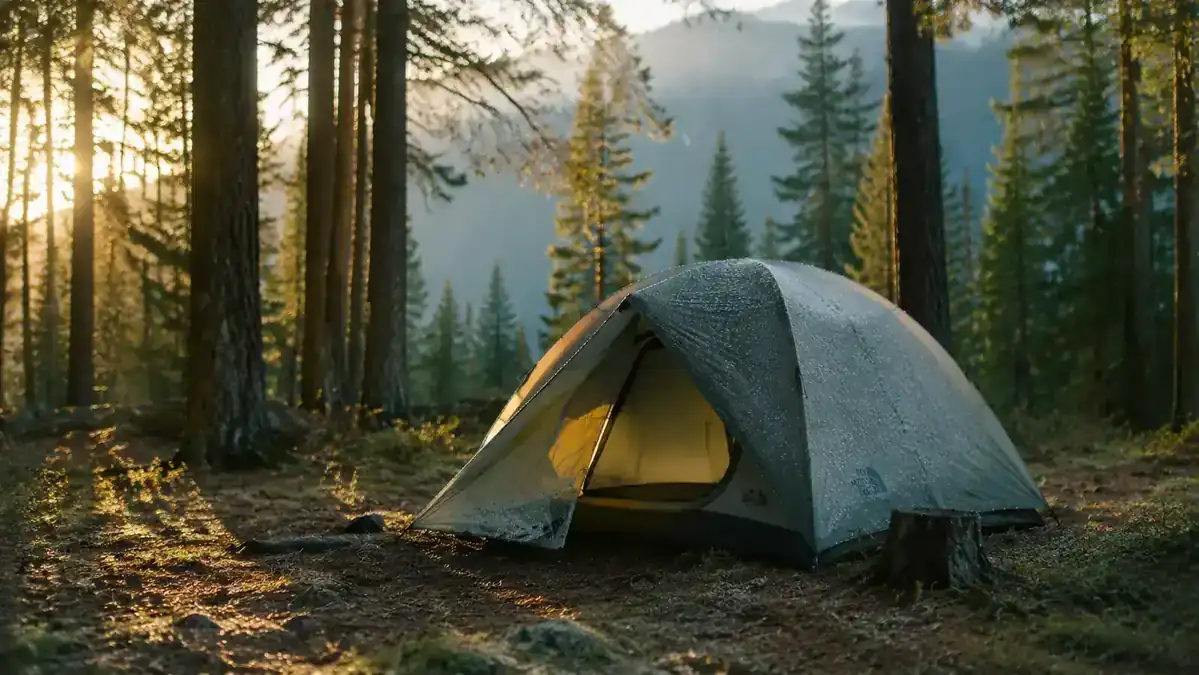
My daughter is nine. My son is six. My wife is patient about camping, but only if the tent goes up fast and stays dry. When I was shopping for a family dome tent last year, I needed something that met all three of those requirements and didn't cost a fortune. I landed on the CORE dome tent and I've been camping out of it ever since. Fourteen trips, two genuine thunderstorms, one night where temps dropped to the upper 30s, and more muddy setup situations than I care to count. This is what I know after living with it.
I want to be straight with you from the start: this is not a perfect tent. But it's a solid tent at a fair price, and for car camping with a family, it does most things right. If you're weighing whether to buy it, this review will tell you what the product listing won't.
The Quick Verdict
A reliable, roomy car-camping dome tent that handles rain well and sets up fast once you know the poles. Not backpacking-grade, but not priced like it either.
Amazon Check Today's Price →If your current tent is leaking, cramped, or takes 45 minutes to pitch, this one fixes all three.
The CORE dome tent has a 4.6-star rating across nearly 4,500 reviews. Check current pricing and availability on Amazon before the size you need sells out.
Amazon Check Today's Price on Amazon →How I've Used It
We bought the CORE dome tent in January and took it on its first trip in February to a state park in Georgia. Cold enough to see your breath, but the kids wanted to camp. The tent handled it fine. Over the next 18 months we've used it at developed campgrounds with hookups, a dispersed site in the national forest where we had to stake it into hard clay, a lakeside spot with zero shade and wind off the water most of the afternoon, and a couple of quick overnight trips where we were setting it up after dark with headlamps.
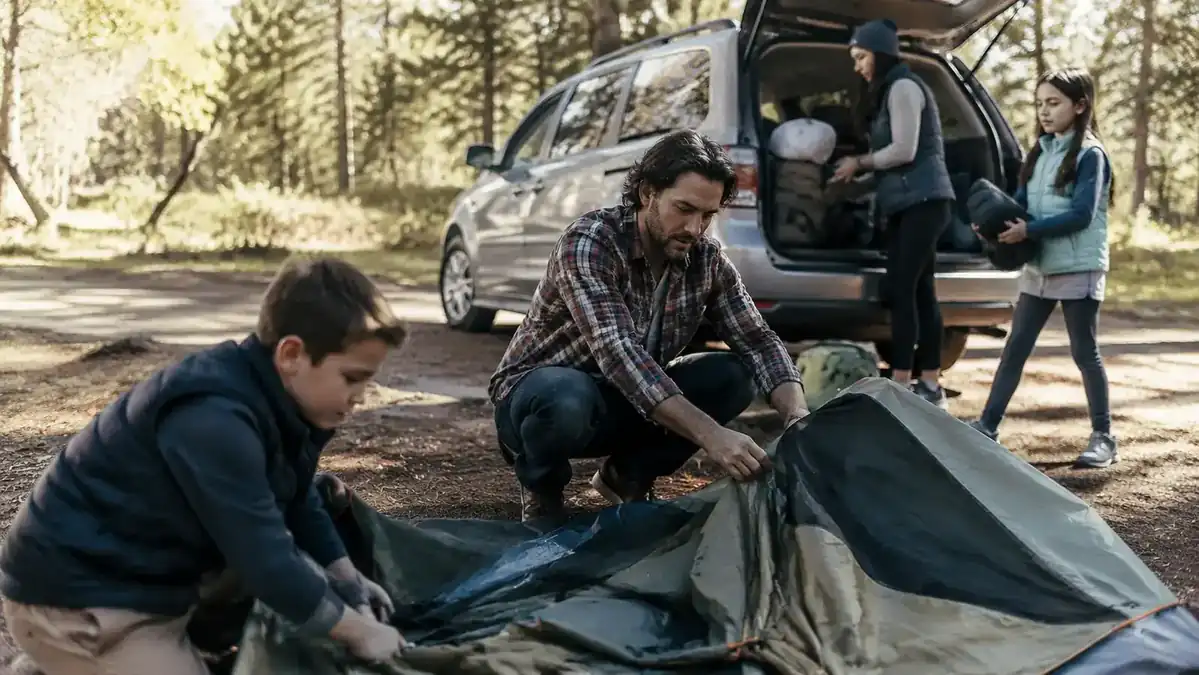
Setup time on the first trip was around 20 minutes. Now I can do it solo in under 10. The pole system is color-coded, which matters more than you'd think when you're juggling poles and kids and someone always has to go to the bathroom right when you're trying to thread the last sleeve. By trip three, the setup had become second nature. If you want a step-by-step breakdown of the fastest way to get a dome tent pitched solo, check our guide on how to set up a camping tent solo and fast.
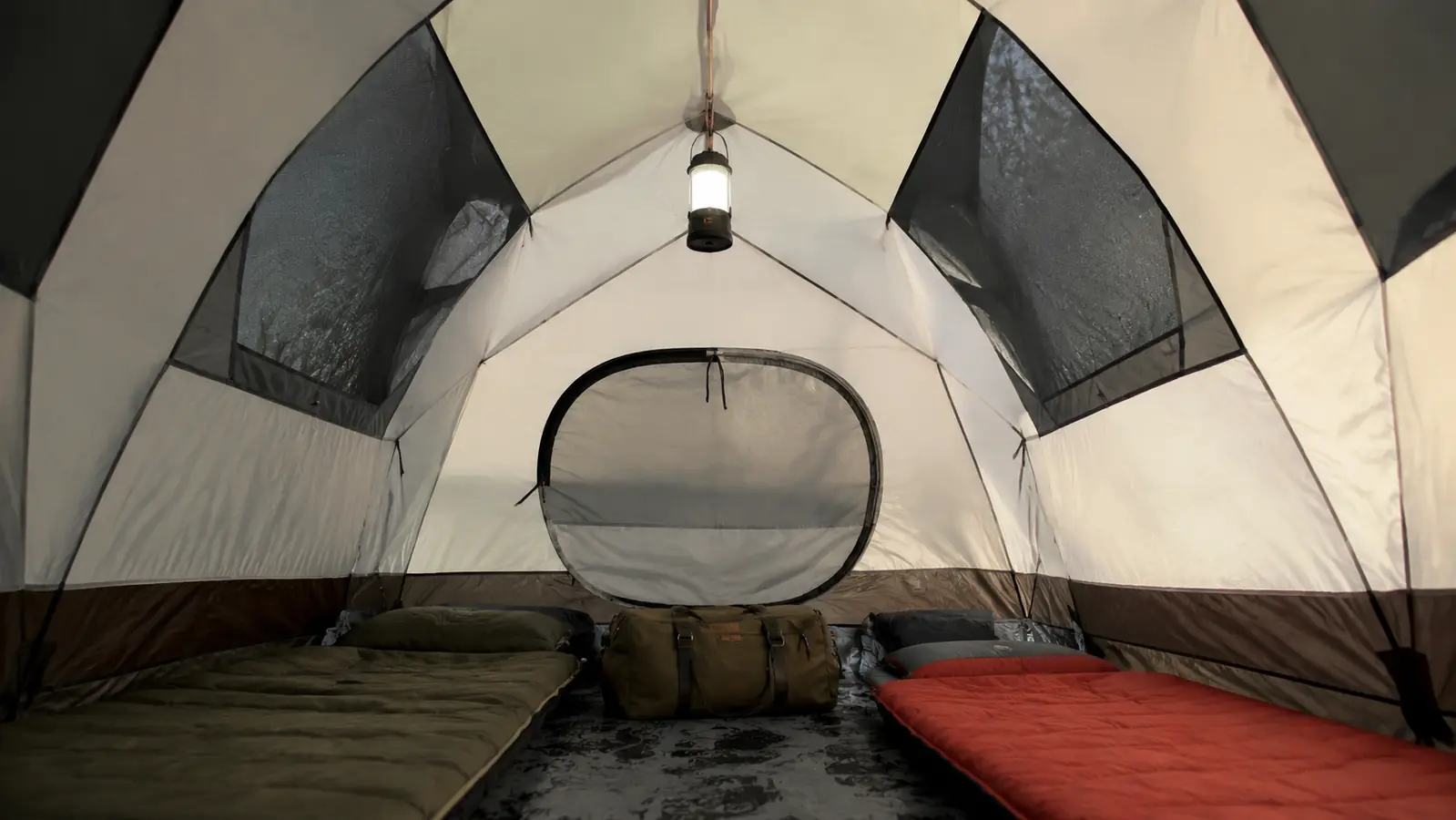
The tent sleeps six according to CORE. In practice, two adults and two kids with sleeping pads and a bit of gear fills it comfortably. I wouldn't want to actually put six adults in it, but for a family of four it's roomy. The center height is good enough that I can stand up, which matters when you're getting kids dressed in the morning or changing out of wet rain gear before bed.
Weatherproofing: Where This Tent Earns Its Money
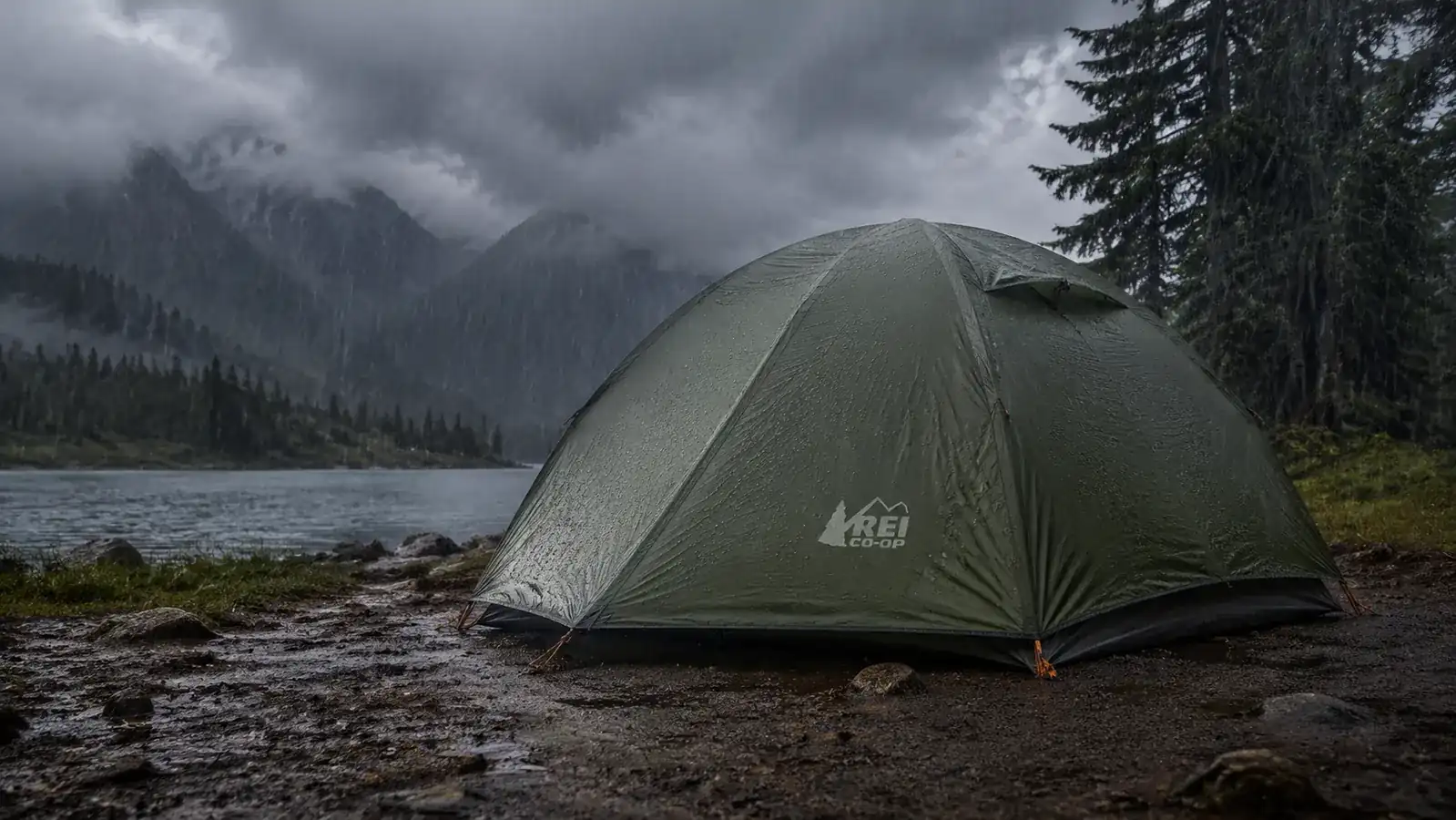
The most important thing a camping tent can do is keep you dry. I've slept in tents where that was a coin flip. The CORE dome tent has a 1500mm hydrostatic head rating on the rainfly and a 3000mm bathtub floor. In plain English: the fly sheds water well and the floor won't wick moisture up through seams. Both of those ratings held up in real rain.
The first real test was a night in April at a campground in the Smoky Mountain foothills. We got a line of storms around 2 a.m., heavy rain and some wind. Not a tornado situation, but legitimately nasty. I got up, checked the tent perimeter, and went back to sleep. The floor was dry. No pooling at the corners, no drips from the seams. The fly had vents at the top that I'd closed before the rain hit, and I'd staked it out tight. That's the key with any dome tent: you have to stake out the fly away from the tent body or you lose your weather protection. When it's done right, this tent performs.
The second storm test was a pop-up in August, late afternoon, no warning. I had the fly on but hadn't staked the fly corners tight because I'd been lazy about it in the heat. We got about 20 minutes of heavy rain. The tent interior stayed dry. The untensioned fly corners flapped hard, but it didn't fail. That told me there's some margin built in.
Pole System and Durability Over Time
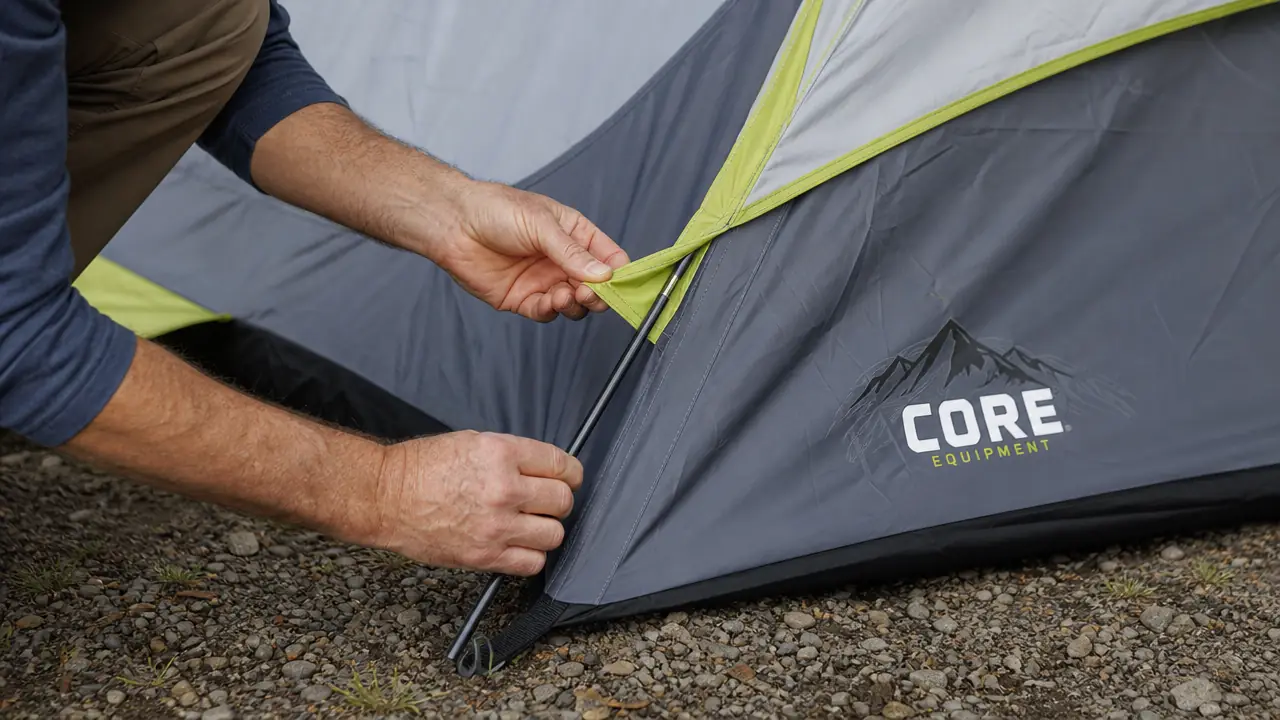
The poles are fiberglass, not aluminum. If you're coming from a backpacking background, that's a downgrade in your mind. But for car camping, fiberglass poles are fine. They're heavier, which doesn't matter when you're carrying the tent 30 feet from your car. They're slightly less stiff, which matters a little in heavy wind but not enough to cause problems at a normal campground.
After 18 months and 14 trips, my poles look the same as they did out of the box. No cracking, no delamination, no bent sections. I've heard from people who've snapped fiberglass tent poles, but usually that's from forcing them in cold weather when the shock cord is stiff, or from bending them past their arc. If you treat them like the tool they are, they hold up.
The tent fabric itself has held up well. Some minor scuffing on the floor from rocky sites, but no tears, no seam failures. The zipper on the main door occasionally needs a second pull to seat correctly, but it's never failed to close. The mesh inner doors zip perfectly. If you want to understand why dome designs handle the field better than cabin-style tents for most conditions, we break that down in detail in our piece on 10 reasons a dome tent beats a cabin tent for camping.
After 14 trips and two real thunderstorms, the floor has stayed dry every single time. That's the number that matters.
Ventilation: Better Than Expected, Not Perfect
Condensation is the enemy of any tent in the morning, and dome tents with double-wall construction are better about it than single-wall designs. The CORE tent has two doors, mesh inner panels, and adjustable vents in the rainfly. On cool nights with good airflow, condensation is minimal. On warm, humid nights with everything closed up, you'll see some moisture on the inner walls by morning. That's physics, not a product defect.
In hot weather, the mesh inner panels help a lot. We camped in Georgia in July with no rain expected and I left the rainfly off entirely on two nights. Air moved through freely and the kids slept fine. With the fly on and the vents open about halfway, it's livable but not cool. If heat is your primary concern, a shade tarp over the tent on the south side makes a bigger difference than any vent configuration. That's true of any tent in this category.
What the Product Listing Gets Wrong
The capacity rating is optimistic. Six people is a campground sleepover with no gear. Four people with typical family camping kit is realistic. If you're buying for four adults who want any comfort, look at a different size or accept that you'll be stepping over each other.
The stake bag holds eight stakes, but you need more than eight stakes for a proper setup with the fly fully tensioned. I carry 16 stakes and use all of them in windy conditions. The included stakes are thin wire, fine for soft ground, useless in rocky or hard clay. Buy a set of heavier aluminum shepherd's hook stakes before your first trip and save yourself the frustration.
The carry bag is tight. You'll wrestle the tent back in on your first few attempts. It helps to fold the poles separately, roll the tent body tight from the foot end, then fold it around the poles. Takes a bit of practice. It's annoying but it's not a dealbreaker. Most tents at this price point have the same problem.
How It Compares to Coleman
The obvious comparison at this price point is the Coleman Sundome. I've used a Coleman Sundome for years before switching to the CORE. The CORE has better ventilation and a slightly higher center height. The Coleman has a simpler pole system and the stakes are marginally better out of the box. For most car campers, the choice between them comes down to which features matter most to you. We do a full side-by-side in our CORE dome tent vs Coleman Sundome comparison if you want the details breakdown by category.
What I Liked
- Rainfly waterproofing holds up in real storms, not just drizzle
- Color-coded pole system makes setup genuinely fast after a couple trips
- Good center height for an adult to stand and move around
- Double-wall construction reduces condensation compared to budget single-wall tents
- Mesh inner doors provide solid ventilation on warm nights
- 4,498 reviews at 4.6 stars is a meaningful signal of consistent quality
Where It Falls Short
- Capacity is overstated: plan for one fewer person than rated for comfortable sleep
- Included stakes are too thin for hard or rocky ground
- Carry bag is a tight fit, especially in the first several trips
- Fiberglass poles flex more than aluminum in hard wind
- No footprint included; worth buying separately to protect the floor
Who This Is For
This tent is built for car campers who want solid weather protection and a roomy interior without spending premium money. If you're doing developed campground trips with your family two to six times a year, this tent will serve you well for several seasons. It's also a good choice for hunters setting up a base camp where the tent stays in one place for a few days and doesn't need to be ultralight. I've used it exactly this way on two fall trips, setting it up at a pull-in and leaving it while I worked the surrounding area. It stays put and keeps your gear dry. For fishing or hiking trips where you're driving to a trailhead and setting up nearby, it works the same way.
Who Should Skip It
If you're backpacking, leave this one on the shelf. It's too heavy and too large for a pack. If you're camping in sustained high winds above 40 mph, you want a four-season tent with a geodesic pole structure. This tent is not rated for that and it's not pretending to be. If you need to actually sleep six adults with gear, you need a larger footprint and you should be looking at cabin-style tents, which have their own tradeoffs but give you the square footage. And if you camp mostly solo, it's more tent than you need, and you'll be frustrated by the carry bag every time.
Fourteen trips. Two thunderstorms. Zero leaks. If that's the kind of track record you're looking for in a family tent, this is the one.
The CORE dome tent is priced for car campers, not REI enthusiasts. With 4,498 reviews and a 4.6-star rating, it's one of the more consistently reviewed tents in this price range. Check today's price on Amazon.
Amazon Check Today's Price on Amazon →