
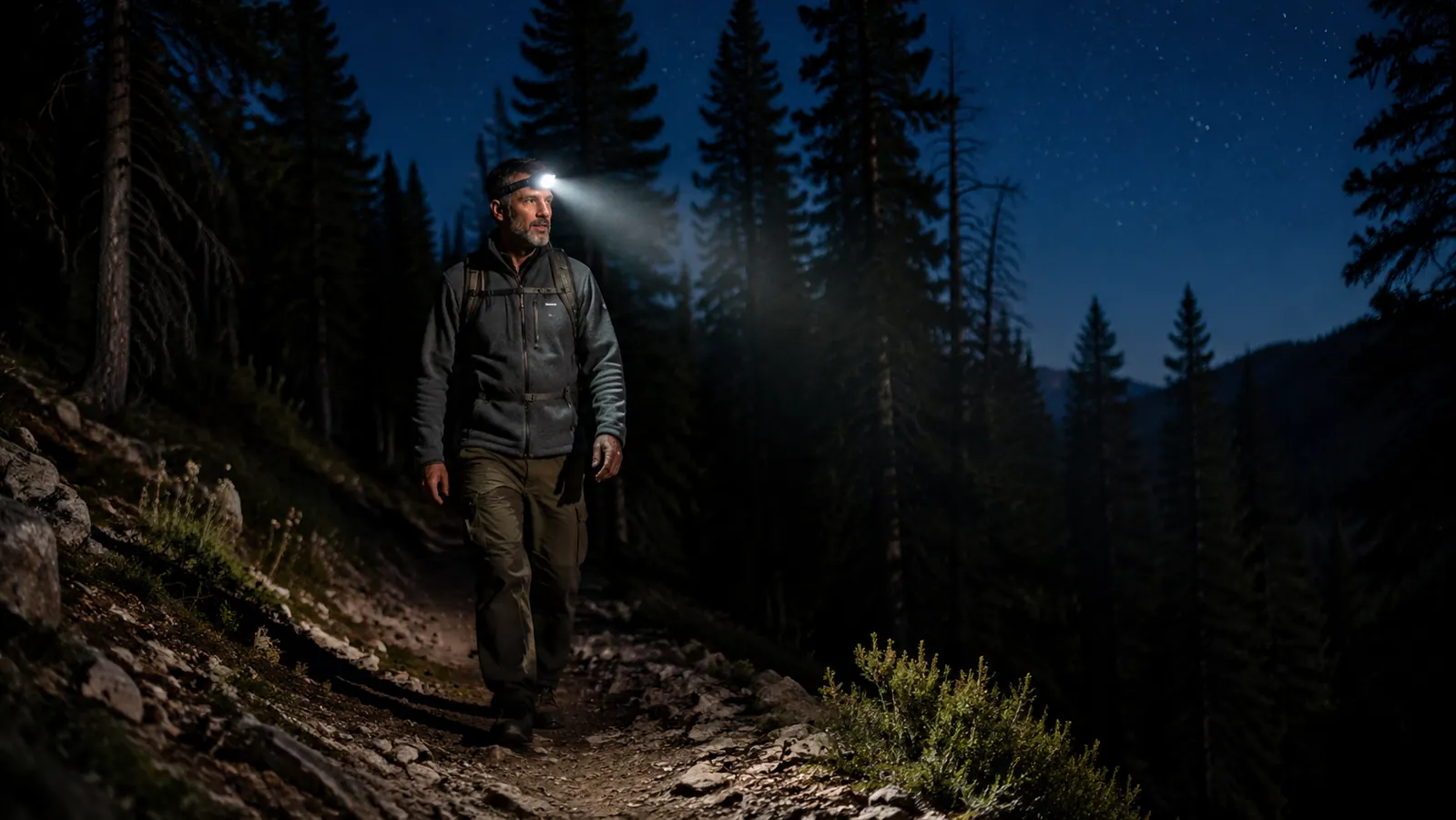
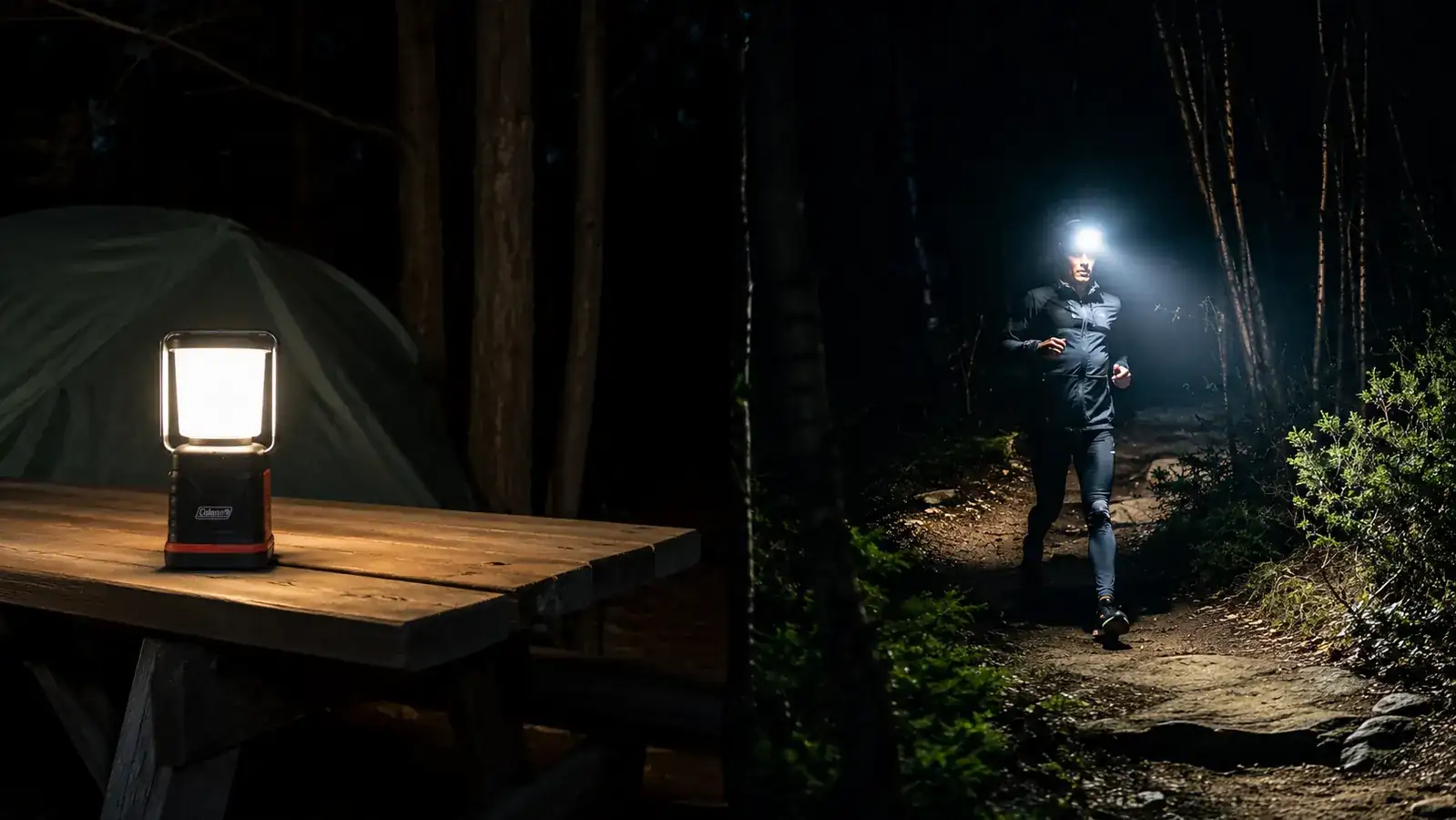
I hauled a battery lantern to every campsite for about eight years. It sat in the middle of the picnic table, lit up a ten-foot circle around it, and ran through four D-cells every long weekend. Then I bought the Blukar rechargeable headlamp to use on a night hike and ended up using it for everything. The lantern is still in the garage. I haven't missed it.
The Blukar runs 2000 lumens on its top setting, charges via USB, and has a motion sensor that turns it on when you reach toward it in the dark. Over 20,000 people on Amazon have bought this thing, and it has a 4.5-star average. That's not a fluke. Here are the 10 reasons it replaced my lantern and why I think most campers, hunters, and hikers should do the same.
If you're still burning through batteries at camp, this changes the math fast.
The Blukar headlamp puts 2000 lumens where your eyes point, recharges via USB, and costs less than a four-pack of D-cells. Over 20,000 buyers. 4.5 stars. Check current pricing below.
Amazon Check Today's Price on Amazon →Your Hands Stay Free
This is the whole argument right there. A lantern lights up the table. A headlamp lights up whatever your hands are doing. Cooking, stringing a fishing line in the dark, field-dressing a deer, setting tent stakes in the rain, finding the bear box at midnight. A lantern makes you hold it or walk away from it. The Blukar stays with you and points where you look. That single difference changes every task after dark at camp.
No More Dead Batteries at the Worst Moment
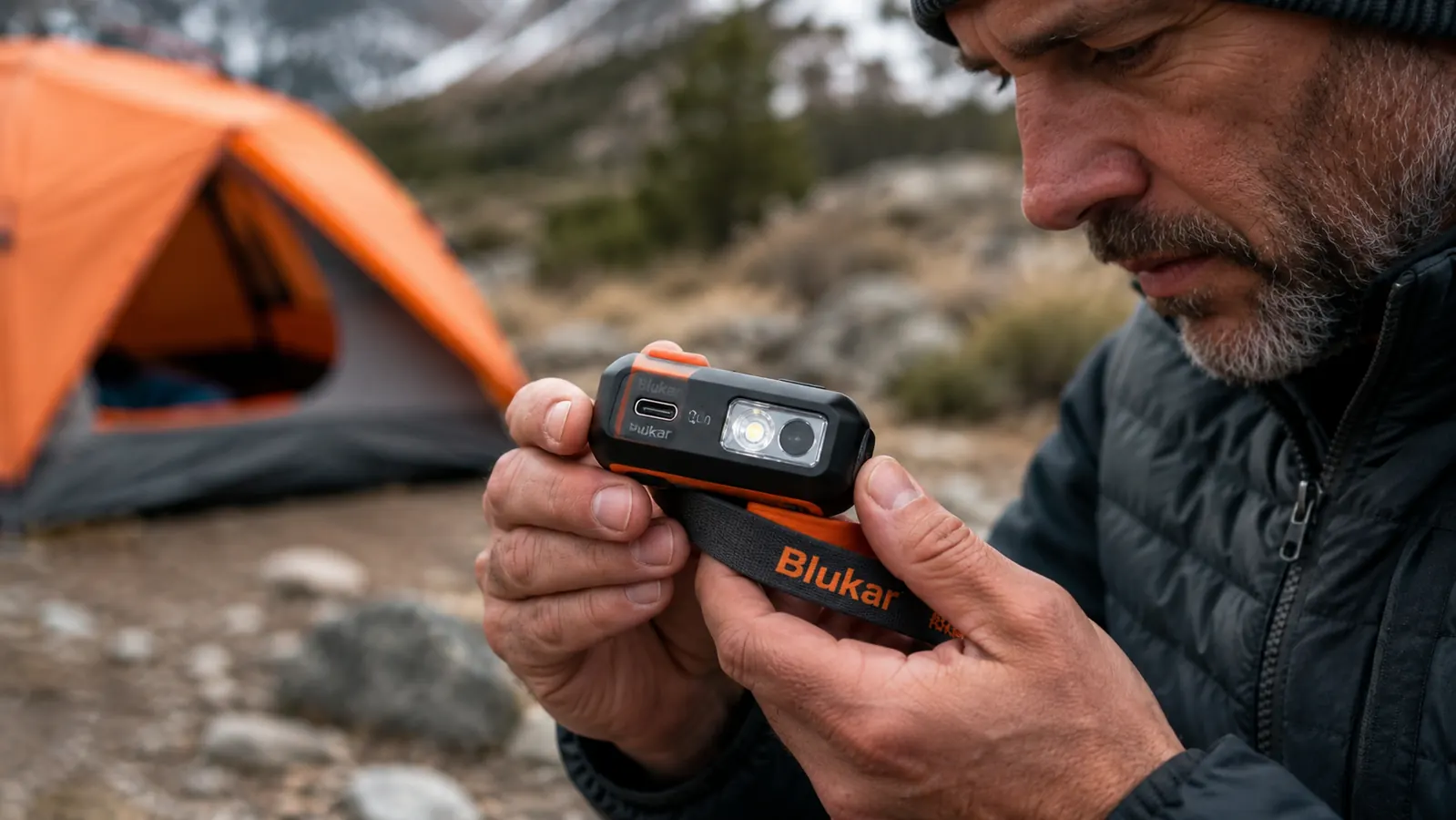
Battery lanterns die mid-trip and you either packed spares or you didn't. The Blukar charges from any USB power bank, car charger, or solar panel. I charge it on the drive to the trailhead and it runs all weekend. If it gets low at camp, fifteen minutes plugged into a small battery pack buys you several more hours. You can't do that with six D-cells.
It Goes Where You Go, Not Where You Leave It
A lantern is furniture. You set it down and work around it. A headlamp goes to the outhouse at 2am, down to the creek for morning fishing, and out to the car when you realize you forgot the cooking grate. The Blukar weighs almost nothing on your head. You stop noticing it's there after five minutes. The lantern would require a second trip.
2000 Lumens Is Legitimately Bright
Most camp lanterns advertise 300 to 500 lumens. The Blukar hits 2000 on its highest setting. That's enough to light up a campsite properly, read a map at 20 feet, or spot a trail marker 50 yards out. I've used it on night hikes in thick timber and it turns dark into workable. You can back it off to a lower mode for close work and save battery. A lantern gives you one brightness and one direction.
The Motion Sensor Is Actually Useful
The Blukar has a motion sensor you can activate so waving your hand near it turns it on. I was skeptical of this as a gimmick. It isn't. Wake up at 3am, wave at it on the tent floor, done. No fumbling for the switch in the dark. No turning on your phone. This sounds small until you've spent thirty seconds on your hands and knees looking for a lantern switch while half asleep.
Packs Down to Almost Nothing
The Blukar is small enough to fit in a jacket pocket. A battery lantern is a dedicated stuff sack item that competes with cooking gear and layers. If you're backpacking, the lantern doesn't make the cut and you know it. Even car camping, the headlamp goes in a pocket of whatever bag you grabbed. If you're pairing it with a quality 55L pack, the headlamp adds nothing to your load. The lantern adds a pound and a half.
Red Mode Protects Your Night Vision
The Blukar has a red-light mode that's worth more than it sounds. When you're hunting or stargazing, a white LED kills your night-adapted vision in an instant. It takes 20 to 30 minutes to get it back. Red light lets you see what you need to see without torching your eyes' adaptation. I use it constantly during early morning deer setups when I need to get through the woods quietly without blasting the hillside with white light.
It Works in Rain and Doesn't Care
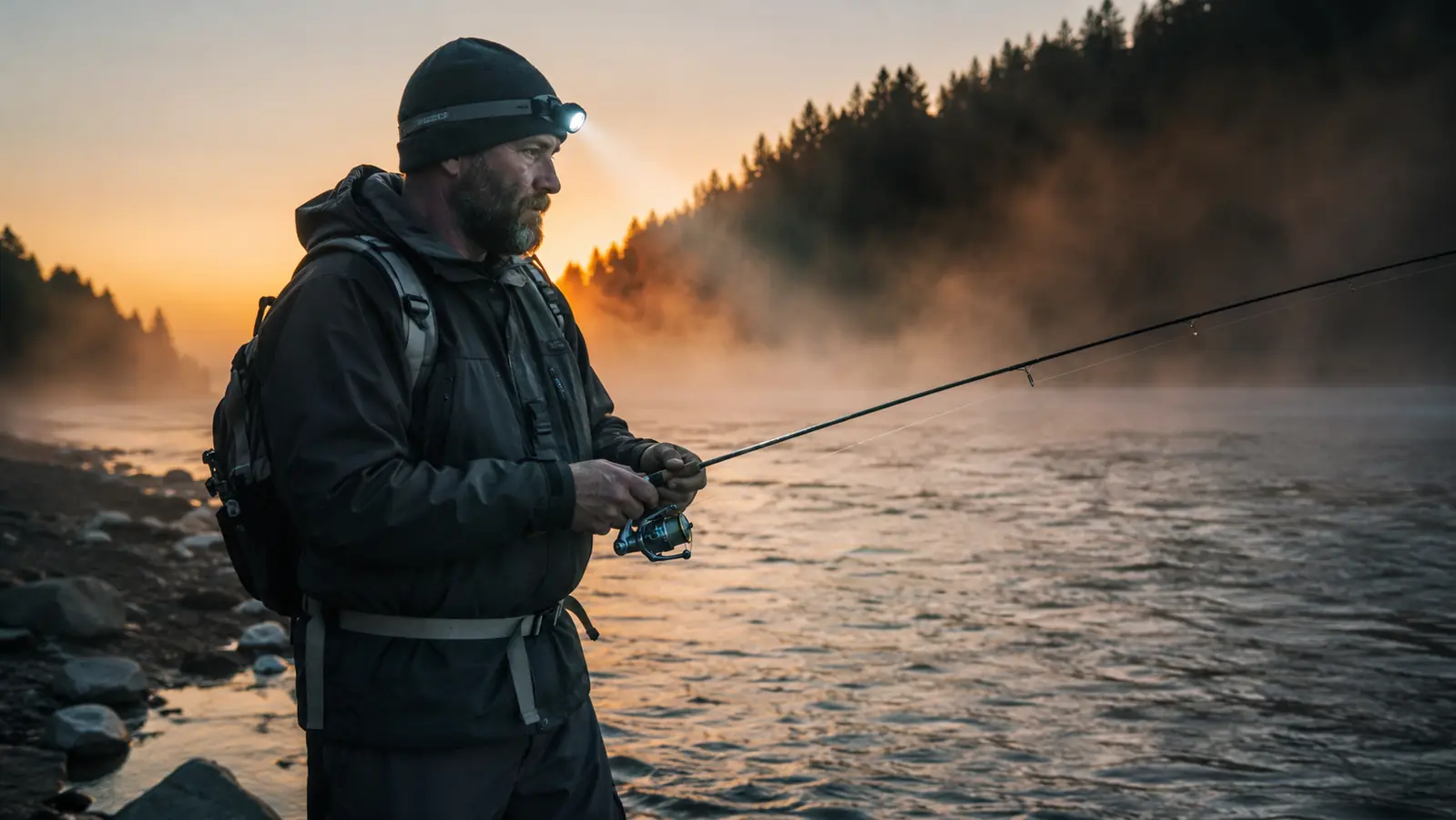
The Blukar has an IPX5 water resistance rating, which means it handles rain without issue. My old battery lanterns always had a spongy seal on the battery compartment that I didn't fully trust in a downpour. The headlamp sits on my forehead under my hood in rain, fog, and light snow and keeps working. I've used it fly fishing in a cold front and never thought twice about the wet. Learn more about getting the most from a headlamp in all conditions here.
The Cost Math Isn't Close
The Blukar is budget-priced at current pricing on Amazon. A four-pack of D-cell batteries costs money and you'll burn through one to two packs per long weekend with a lantern. After four trips, the headlamp has paid for itself and you'll never buy batteries for it again as long as you have a USB port. For a budget-range item with 20,000-plus reviews, the math is about as obvious as it gets.
One Headlamp Covers Camp, Trail, and Hunt
I used to own a camp lantern, a cheap headlamp for hiking, and a separate red-light unit for hunting. Three pieces of gear doing what one Blukar now handles. The 2000-lumen white mode handles camp and trail. The red mode handles dawn hunting setups. The dimmer modes handle tent reading and close work. Consolidating to one quality piece of gear is the move. Read the full Blukar long-term review for a season-by-season breakdown of how it's held up across all three uses.
What I'd Skip
I'm not going to tell you to throw the lantern in the trash. If you have kids at camp who are afraid of the dark and want a glowing dome on the picnic table all night, a lantern still has a use. Same goes for a shared campsite where you want ambient light everyone can see by without wearing something on their head. But for everything active, everything after dark that involves moving and doing, a rechargeable headlamp is the better tool. The Blukar in particular has been reliable and bright enough that I've stopped looking at alternatives.
The lantern lit the table. The headlamp lit wherever I was working. Once I figured that out, the lantern stopped coming to camp.
If you're curious how this plays out on an actual overnight, read the story about the night the headlamp got us back to camp. That's not a hypothetical. That's a real situation where having it on my head instead of back at the campsite was the difference between a story and a problem.
Done carrying dead batteries and a lantern that stays put while you move around in the dark?
The Blukar rechargeable headlamp is 2000 lumens, USB-charged, motion-sensor activated, and weather resistant. It's what I use now for camp, trail, and hunting setups. Check today's price below and read the 20,000-plus reviews from people who use it the same way.
Amazon Check Today's Price on Amazon →