
There is a question I get at least a couple of times a year at the trailhead or the hunting camp: somebody is standing there with a new TETON Sports Scout 55L on their back, pack loaded up for a three-day trip, and they are already grimacing. "I thought this thing was supposed to be comfortable." I have been there. I bought the Scout knowing full well it was a budget pack, and I used it hard on day hikes, hunting camps, and a couple of backpacking trips before I understood exactly what it is and what it is not. This is not the review that tells you to go buy it without reading the fine print. This is the review that tells you the fine print.
The TETON Scout 55L has a 4.7-star rating across nearly 8,000 reviews on Amazon. That number is real. But ratings average out the guy who used it for a car-camping weekend with 20 lbs in the bag and the guy who loaded it to 45 lbs and hiked 12 miles of switchbacks. Those are two completely different experiences. If you are shopping this pack and you are not sure which camp you fall into, keep reading before you click buy.
The Quick Verdict
A genuinely capable budget pack for loads under 35 lbs and torso lengths in the sweet spot, but it has a real carry-weight ceiling and a narrower fit range than the marketing suggests.
Amazon Check Today's Price →Carrying under 35 lbs? The Scout earns its price.
For weekend trips and hunting day-hikes where your load stays moderate, the TETON Scout 55L is one of the best values in the category. Check today's price and availability on Amazon before you read the rest.
Amazon Check Today's Price on Amazon →How I Actually Used This Pack
I picked up the Scout to replace a worn-out Kelty that had finally given up on me. My typical use is weekend camping trips in the Cascades, one or two-night hunting base camps in October where the pack has to carry gear in and potentially meat out, and the occasional three-day backpacking trip where I am actually sleeping out every night. That range of use is exactly the stress test a pack like this needs.
I ran the Scout on six trips before I sat down to write this. Lightest load: 22 lbs on a one-night hike to a ridge camp above 6,000 feet. Heaviest load: 42 lbs on a mule deer hunt where I was carrying a sleeping system, food for three days, rain gear, and hunting kit. Those two trips told me everything about where the Scout works and where it breaks down.
I am 5'11" with a 19-inch torso measurement. Medium frame. 195 lbs. I mention this because the Scout's fit range is something the listing photo glosses over, and it matters more than any other spec on this pack.
The Real Carry Weight Ceiling
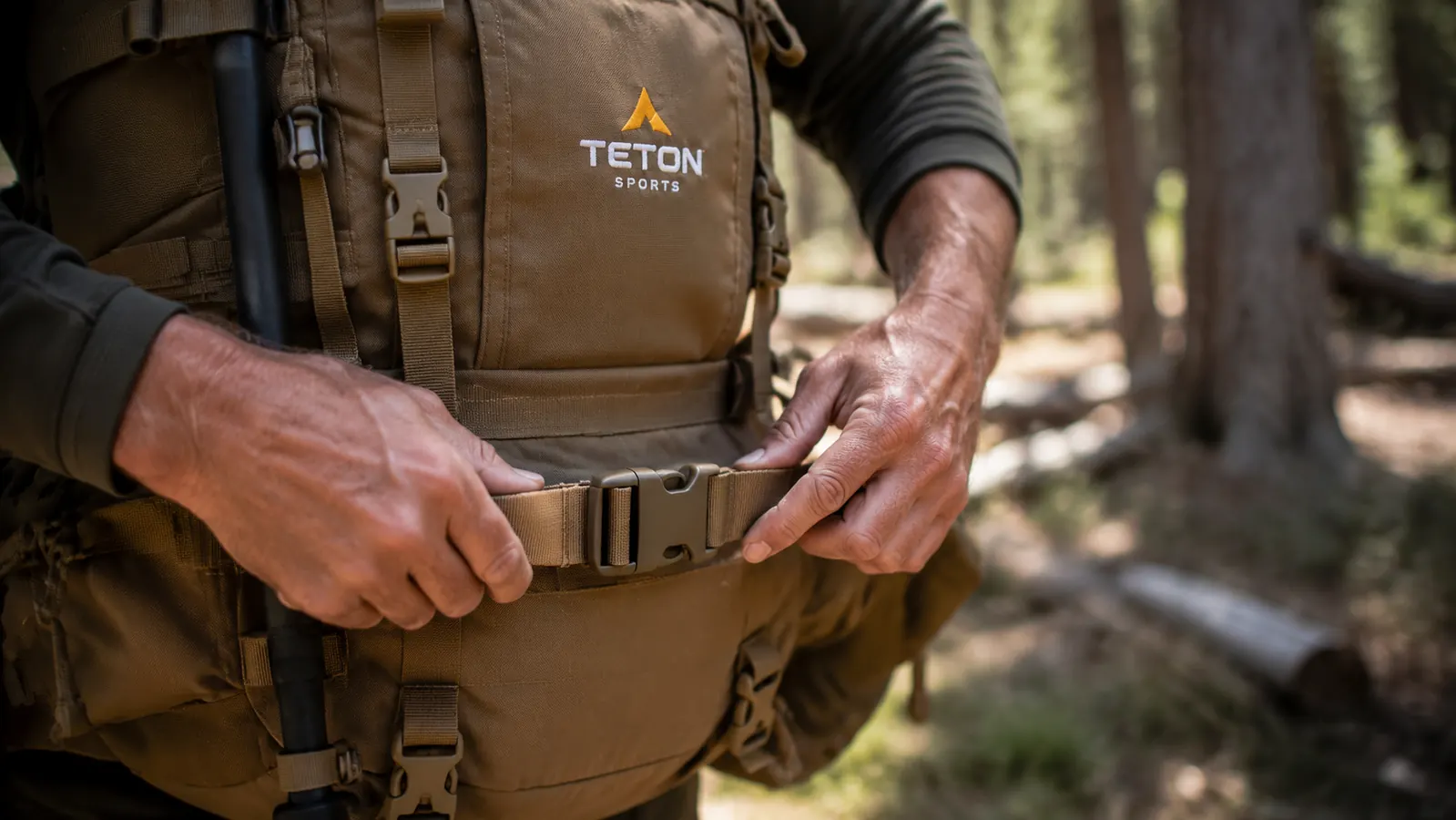
Here is the thing nobody says in the marketing copy: the Scout starts to fail you above 35 lbs. Not catastrophically, not all at once, but it fails. The hipbelt, which is padded and looks substantial in photos, does not transfer load well under heavy weight. Past 35 lbs, the shoulder straps begin to take more of the load than they should. By the time you are at 40 lbs, you are basically carrying it like a school backpack with extra steps.
I noticed it clearly on the deer hunt. The pack was loaded at about 42 lbs when I pushed out of camp on day two, headed up a steep drainage. By mile three, my shoulders were burning. The hipbelt was sitting right, I had checked all the adjustments, but the belt just was not doing the job. I stopped, tightened the load lifters, redistributed some weight toward the top of the bag, and got some relief. But that should not be the move at mile three with miles still to go.
In contrast, on the 22-lb trip, the pack was excellent. Light, comfortable, no hot spots. The Scout at moderate weight is a genuinely pleasant pack. The problem is that 55 liters invites people to fill it up, and when it is full, it is usually over 35 lbs. The long-term use review on this site covers how the pack performs trip after trip at mixed loads. This review is specifically about understanding the ceiling before you buy.
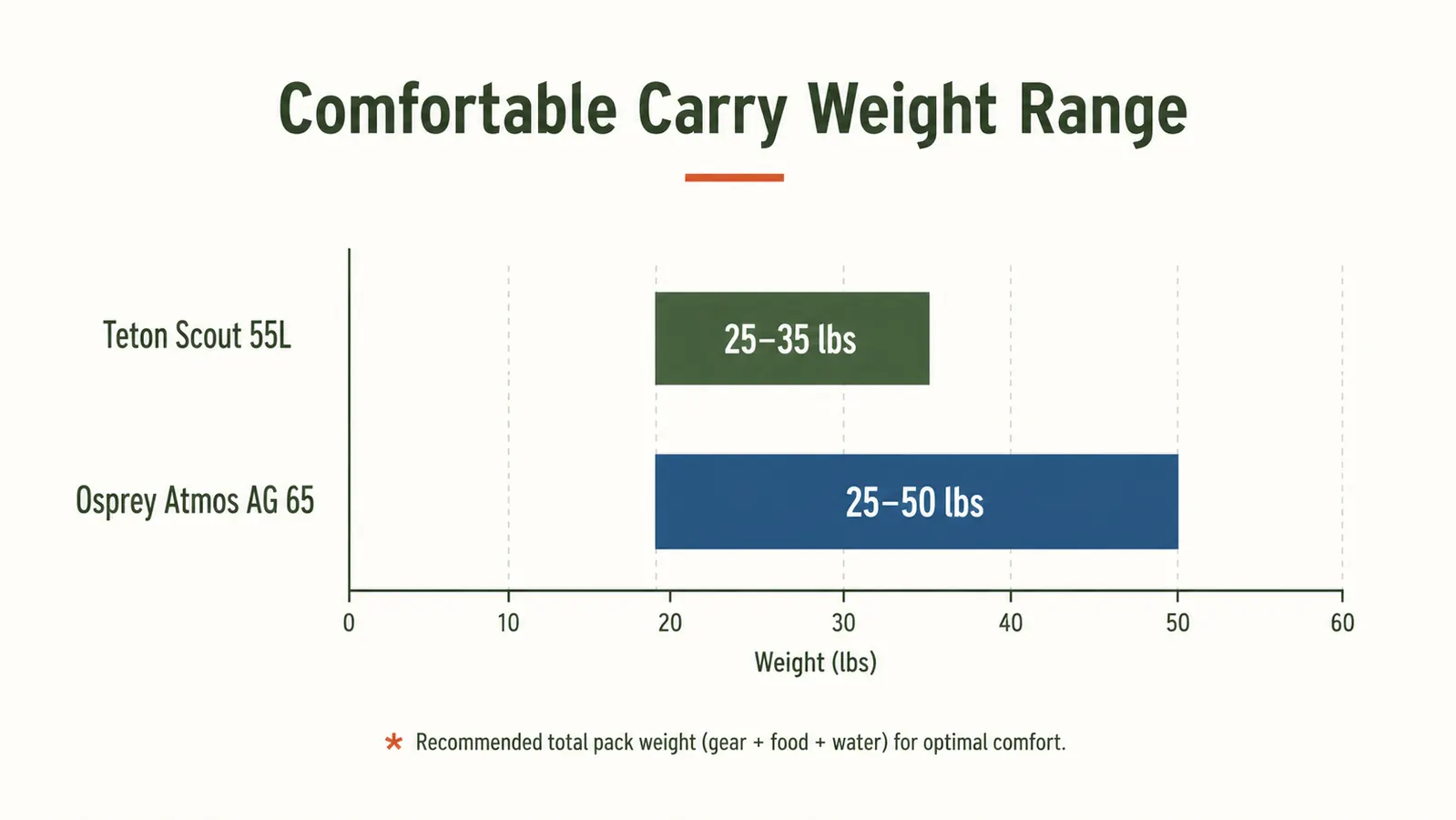
Past 35 lbs, you are basically carrying it like a school backpack with extra steps. The hipbelt looks substantial in photos. Under heavy load, it does not perform like one.
Fit Range: Who This Actually Fits Well
The Scout uses a semi-rigid internal frame with an adjustable torso length system. It works. For most average-height adults with a torso in the 17-to-20-inch range, the adjustment gets you close enough to a comfortable fit. But "close enough" is doing a lot of work in that sentence.
Shorter torsos, say 15 to 16 inches, will find the hipbelt sitting too low no matter how they adjust the frame. The hipbelt needs to wrap around the iliac crest, the bony shelf of your hip, to transfer load. When it sits below that shelf, it floats on soft tissue and transfers almost nothing. I watched a buddy of mine, 5'6" with a short torso, try to dial this pack in for 45 minutes on a camping trip. He never got it right. He ended up borrowing a different pack for day hikes on that trip and using the Scout only as a base camp bag.
On the other end, very tall people, or anyone with a torso over 21 inches, will max out the adjustment range and still feel like the shoulder harness does not sit quite right. The load lifter straps go slack, which means load transfer from shoulders to frame is reduced. It is not a dealbreaker at light loads, but it compounds the heavy-load problem.
The sweet spot for this pack is a torso between 17 and 20 inches, medium-build frame, carrying 25 to 35 lbs. If that is you, the Scout at its current price is a legitimate buy. If you are outside those parameters, read the comparison against the Osprey Atmos before committing. The Scout vs Osprey Atmos AG 65 comparison on this site breaks down where the price gap between them actually matters.

Frame, Suspension, and Build Quality Honestly Assessed
The Scout's frame is two aluminum stays sewn into a sleeve behind the back panel. They are removable. Some people pull them for ultra-light use, but I would not, because without them the pack goes completely floppy and the already-limited hipbelt transfer disappears entirely. Leave the stays in.
The back panel has a mesh-covered foam pad. It breathes reasonably well in mild temperatures. In August heat, you are going to sweat against it regardless. Do not let anyone sell you on ventilation claims for budget internal frame packs. There is no airflow channel. Your back gets wet. That is the category, not a flaw unique to the Scout.
Fabric is 600D polyester. I have not punched a hole in mine. I have scraped it against granite, dragged it through brush, and shoved it in and out of truck beds. After a full season of that, there is some fraying on the outer pocket zipper tape and a small abrasion mark on the bottom panel. Nothing structural, nothing that compromises the pack. Budget packs at 600D usually outlast what most people expect. The stitching at the shoulder harness attachment points is double-stitched and has not moved.
Organization: Better Than It Should Be at This Price
The layout is straightforward. Big main compartment with a floating lid that doubles as a day pouch. Two front slash pockets for snacks, maps, or quick-grab items. Two water bottle pockets on the sides, both accommodating 32-oz bottles without a fight. Internal organization is minimal, which is honestly fine for this kind of pack. You use your stuff sacks, your sleeping bag compression sack, your food bag. The main compartment is a bucket; you load it accordingly.
The lid pouch has two zippers and holds more than it looks. I carry my first aid kit, headlamp, and emergency rain cover up there on hunting trips so I can get to them without opening the main bag. The Scout handles this kind of field organization well. If you want a complete list of how to build out your load for a weekend trip in this pack, the packing guide for the 55L on this site gives you the exact order I use.
Compression straps on both sides and a top strap on the lid let you cinch the bag down when it is not full. This matters more than most reviews mention. A half-full 55L flops around and shifts weight unless you cinch it down. The Scout's compression system works well enough that you can run it at 30 to 40 liters of actual load without the pack becoming sloppy.
What I Liked
- Genuinely comfortable at loads under 35 lbs, especially for torso lengths between 17 and 20 inches
- 55 liters of real capacity for the price -- the main compartment is clean and packs efficiently
- Lid pouch doubles as a usable day bag, something you actually use at camp
- Compression straps prevent load shift on partially-filled carries
- Fabric and stitching have held up to hard field use: granite, brush, truck beds
- Side pockets fit 32-oz water bottles without squeezing
- Adjustable torso works well for the average-height, average-build outdoorsman
Where It Falls Short
- Hipbelt does not transfer load effectively above 35 lbs -- shoulders take over
- Short torso users (under 17 inches) will never get the hipbelt positioned correctly
- Back panel has no real airflow -- you will sweat against it in warm weather
- Frame stays are thin; without them the pack is too floppy to load efficiently
- No sternum strap adjustment range for very broad or very narrow chests
- Rain cover is sold separately -- for a pack this size, it should be included
Who This Is For
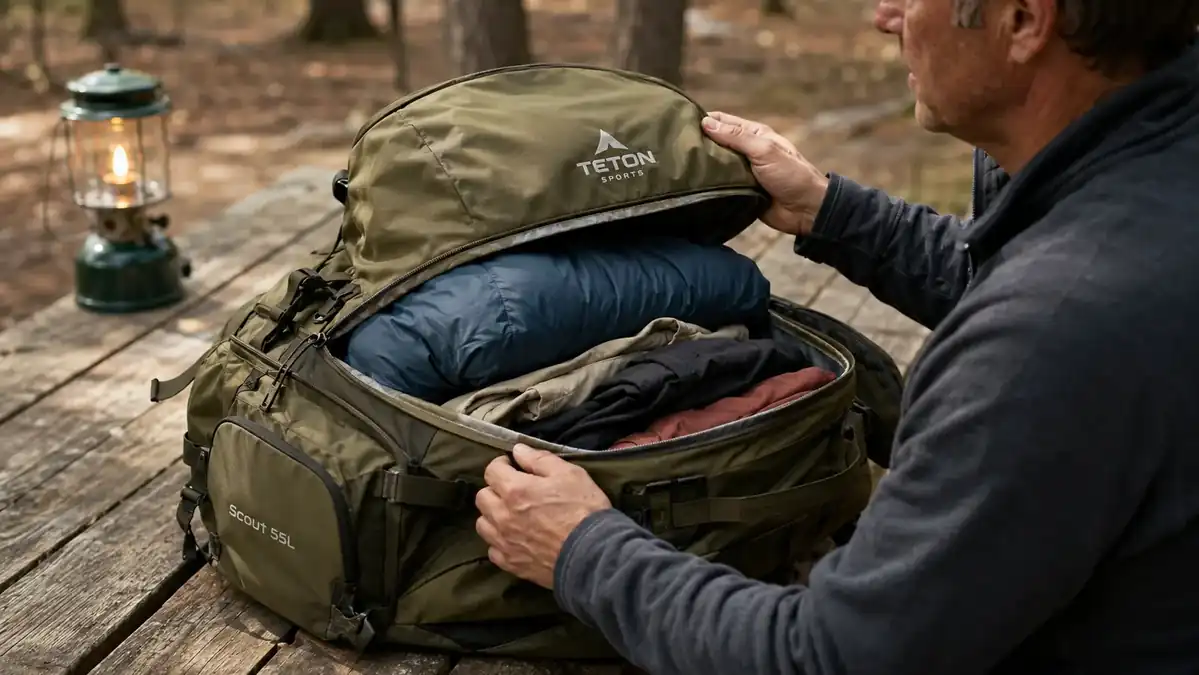
Buy the Scout if you are an average-height adult with a torso in the 17-to-20-inch range, your typical load runs 25 to 35 lbs, and you are doing weekend camping trips, day hunts where the pack doubles as base camp storage, or overnights where the trip is low-mileage and you are not grinding out elevation gain with a heavy bag. It is also a good option for car camping where the pack is just transport and not a thing you are wearing for six hours a day. At the current price, for that profile, it is hard to beat.
Who Should Skip It
Skip the Scout if your loads regularly exceed 35 lbs, you have a short or long torso outside the 17-to-20-inch range, or you are planning multi-day trips with serious elevation and mileage. It will carry the weight, but it will not carry it comfortably. At 40-plus lbs over a long day, your shoulders will remind you that you bought a budget pack. If that describes your use case, spend the extra money on a pack with a better suspension -- the Osprey Atmos is the direct comparison, and the difference in heavy-load comfort is not subtle. For a side-by-side breakdown of exactly what you get for that price difference, see the Scout vs Osprey Atmos comparison.
Right load, right torso length? The Scout is hard to beat at this price.
For weekend camping and hunting base camps where your load stays under 35 lbs, the TETON Scout 55L delivers solid value at a budget-friendly price. See current pricing and reviews on Amazon.
Amazon Check Today's Price on Amazon →